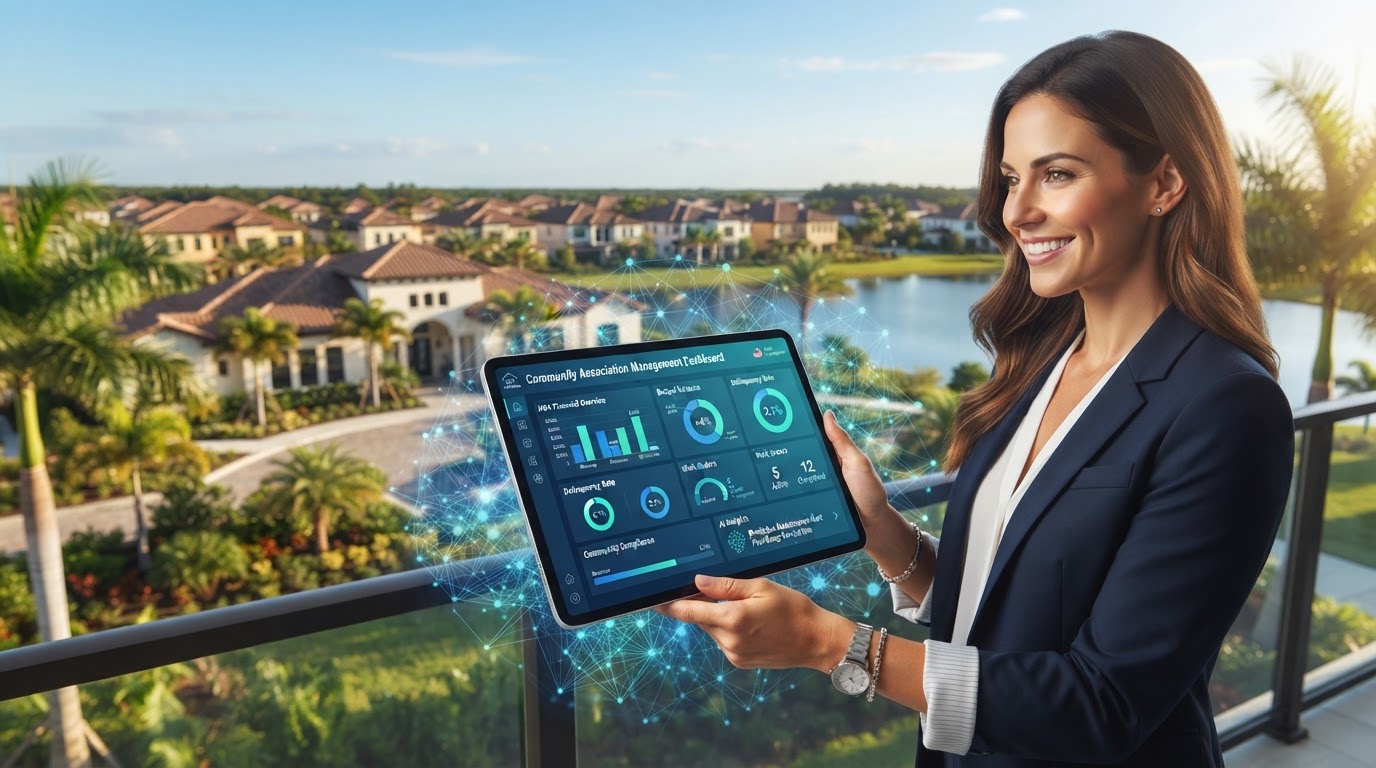
AI & Modern Technology in Association Management: Streamlining HOA Operations, Financials, and Board Decisions
Table of Contents
- How AI Is Transforming Community Association Management
- AI for Architectural Review Parsing
- AI-Powered Vendor Communication
- Community Association Financial Management with AI
- Violation Processing and Enforcement
- The Community Brain: Building an Association Memory Bank
- What Goes Into the Community Brain?
- Why the Community Brain Matters
- Smart Repository and Records Management System
- Balancing Automated Messaging with Human Governance
- The Human-in-the-Loop Principle
- Appropriate Use Policies
- Confidential Information That Must Never Be Used in AI
- AI Business Solutions for HOA Management Companies
- Local Impact: AI in Bradenton, Sarasota, and Lakewood Ranch
- How to Get Started with AI in Your Association
- Frequently Asked Questions
Quick Summary: Powerhouse Executives helps community associations in Parrish, Bradenton, Sarasota, and Lakewood Ranch, Florida, leverage AI for association management. This guide explores how HOA boards and CAM firms use AI for architectural review parsing, vendor communication, financial forecasting, violation processing, and building a Community Brain-a historical memory bank of governing documents and meeting minutes.
Artificial Intelligence is no longer a distant concept for community association management. Across master-planned communities in Bradenton, Sarasota, and Lakewood Ranch, forward-thinking HOA boards and licensed CAM firms are actively deploying AI tools to streamline operations, improve financial decision-making, and reduce the administrative burden on volunteer leaders.
From parsing architectural review submissions to forecasting reserve fund shortfalls, AI for association management is reshaping how communities operate. This article explores the practical applications, the balance between automation and human governance, and how Florida associations can build what we call the Community Brain-a historical memory bank that makes governing documents, meeting minutes, and statutory records instantly searchable.
How AI Is Transforming Community Association Management
Community association management (CAM) firms and self-managed boards handle an enormous volume of information daily. Governing documents, Florida statutes, vendor contracts, financial reports, violation logs, and meeting minutes accumulate year after year. Traditionally, retrieving a specific covenant or cross-referencing a board decision from three years ago meant hours of manual searching.
AI changes this equation entirely. By applying natural language processing and machine learning to association records, boards and managers can query their own documents conversationally and receive accurate, sourced answers in seconds.
AI for Architectural Review Parsing
Architectural Review Committee (ARC) submissions are one of the most time-intensive processes in any HOA. Each request must be evaluated against the community's architectural guidelines, CC&Rs, and prior approvals. AI can parse incoming ARC applications, automatically flag potential covenant conflicts, and surface relevant precedent from previously approved or denied submissions.
For master-planned communities in Lakewood Ranch and Sarasota, where architectural standards are particularly detailed, this capability can reduce ARC turnaround time from weeks to days while maintaining consistency and fairness.
AI-Powered Vendor Communication
Managing vendor relationships across multiple associations involves constant communication-scope changes, scheduling, invoice disputes, and performance tracking. AI-assisted tools can draft vendor correspondence, summarize lengthy email threads, and generate work order descriptions that are clear and actionable.
This does not replace the manager's judgment. It removes the repetitive drafting burden so the CAM can focus on vendor performance evaluation and relationship management.
Community Association Financial Management with AI
Financial forecasting is one of the most powerful applications of AI in HOA management. By analyzing historical assessment collection rates, vendor cost trends, and reserve study projections, AI tools can help boards identify potential shortfalls months before they become crises.
For Florida associations navigating rising insurance premiums and reserve funding requirements under Chapter 720 and Chapter 718, predictive financial modeling is not a luxury-it is a governance necessity.
Violation Processing and Enforcement
AI can assist with violation processing by analyzing inspection photos, cross-referencing the community's rules and regulations, and generating draft violation notices for board or manager review. This ensures consistent enforcement and reduces the risk of selective enforcement claims under Florida law.
Every AI-generated notice must still be reviewed by a qualified manager or board member before it is sent. AI accelerates the process; it does not replace human oversight.
The Community Brain: Building an Association Memory Bank
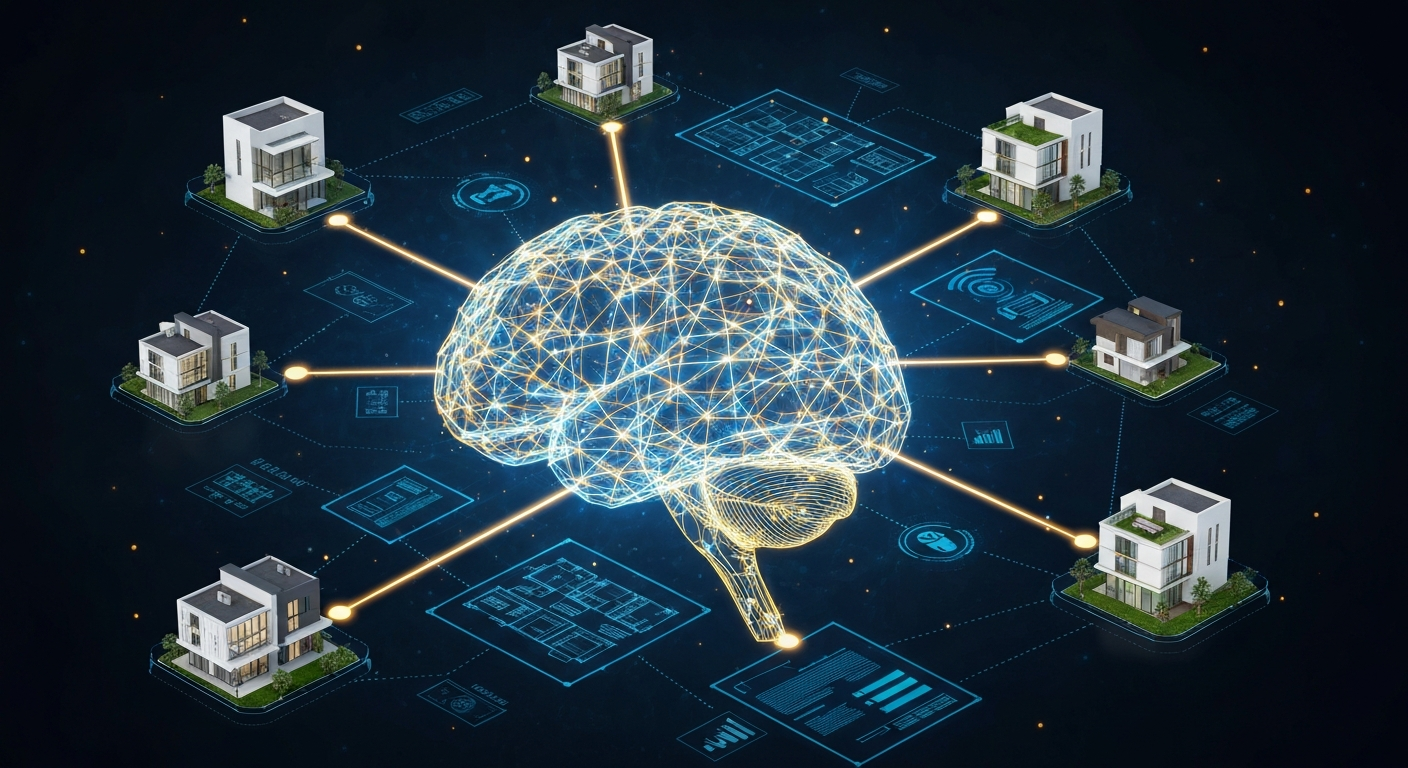
One of the most transformative concepts in AI community management is what we call the Community Brain-a centralized, AI-powered repository that serves as the association's historical memory bank.
What Goes Into the Community Brain?
- Governing Documents: Declarations, CC&Rs, bylaws, articles of incorporation, and all recorded amendments
- Meeting Minutes: Every board meeting, annual meeting, and committee meeting minute, fully searchable
- Rules and Resolutions: Adopted rules, board resolutions, and policy documents
- Official Records: All documents required to be maintained under Florida Statutes 720.303 and 718.111
- Vendor Contracts and History: Active and historical vendor agreements, scopes of work, and performance records
- Financial Records: Budgets, audits, reserve studies, and assessment collection histories
Why the Community Brain Matters
When a new board member joins, they typically inherit years of institutional knowledge locked in filing cabinets and scattered PDFs. The Community Brain makes that knowledge instantly accessible. A board member can ask, "What did the board decide about short-term rentals in 2023?" and receive a sourced answer citing the specific meeting minutes and resolution number.
This eliminates the institutional knowledge gap that plagues board transitions, reduces the risk of inconsistent decisions, and creates a permanent, searchable record of governance.
Smart Repository and Records Management System
The Community Brain functions as both a smart repository and a records management system that complies with Florida's official records requirements. Under Florida Statute 720.303, HOAs must maintain specific records and make them available to members. An AI-powered system can automate retention schedules, flag documents due for destruction, and generate records request responses in minutes rather than days.
Balancing Automated Messaging with Human Governance
The most common concern we hear from boards across Manatee and Sarasota counties is: Where do we draw the line between automation and human judgment?
The answer is rooted in fiduciary duty. Under Florida law, board members cannot delegate their decision-making authority to a machine. AI can draft, summarize, and surface information-but the board must review, deliberate, and decide.
The Human-in-the-Loop Principle
Every AI-generated output that affects a homeowner-whether a violation notice, a budget projection, or a policy draft-must pass through human review before it is acted upon. This principle protects the association from liability and ensures that context, compassion, and common sense remain part of governance.
Appropriate Use Policies
Associations adopting AI should establish a written acceptable use policy that defines:
- Which tasks AI may assist with
- Who is responsible for reviewing AI-generated content
- How homeowner data is protected
- What records are included in the AI system
- How often outputs are audited for accuracy
Confidential Information That Must Never Be Used in AI
Not all association records belong in an AI system. Boards and managers must carefully classify what is safe to include and what must be strictly excluded. Feeding the wrong data into a public AI tool can expose the association to privacy violations, legal liability, and regulatory penalties under Florida and federal law.
The following confidential information should never be entered into public or third-party AI tools:
- Social Security Numbers and Driver's License Numbers: Any personally identifiable information (PII) collected during background checks, tenant screening, or vendor onboarding must be completely excluded from AI systems.
- Financial Account Numbers: Association bank account numbers, routing numbers, credit card numbers, and homeowner payment processing data must never be shared with AI platforms.
- Medical and Disability Records: Any documentation related to a homeowner's reasonable accommodation request, medical condition, or disability status is protected under the Fair Housing Act and HIPAA-adjacent privacy standards. This information must never be processed by AI.
- Legal Communications with Association Counsel: Attorney-client privileged correspondence, litigation strategy documents, and legal opinions are strictly confidential. Entering these into an AI system can waive privilege and compromise the association's legal position.
- Personnel and Employment Records: CAM employee files, disciplinary records, performance evaluations, and compensation data should never be submitted to AI tools.
- Pending Insurance Claims: Unsettled claim details, adjuster communications, and damage assessments related to active litigation or insurance disputes should be excluded to avoid compromising the association's position.
- Unredacted Owner Account Histories: While aggregate financial data may be useful for forecasting, individual homeowner delinquency records, collection histories, and lien information contain sensitive personal data that should not be exposed to AI systems without proper anonymization.
- Security and Access Codes: Gate codes, alarm system credentials, vendor access keycodes, and any physical security information must never be entered into AI platforms.
Best Practice: Before any document is added to an AI-powered Community Brain or knowledge repository, it should pass through a redaction and classification review. The association should maintain a written data classification policy that categorizes every document type as either AI-permitted or AI-restricted. When in doubt, exclude the document. The risk of exposing confidential homeowner information far outweighs any convenience benefit.
AI Business Solutions for HOA Management Companies
For CAM firms managing portfolios of 500–3,000 doors across Tampa Bay, AI is not just a productivity tool-it is a competitive advantage. HOA business solutions powered by AI can:
- Reduce manager workload by 30–40% on repetitive administrative tasks
- Improve board satisfaction through faster response times
- Standardize operations across all associations in the portfolio
- Identify at-risk communities before renewal season
- Generate consistent, professional communications across all client associations
At Powerhouse Executives, we help management companies evaluate, select, and implement AI tools through our Fractional Operations service and AI Readiness Assessment.
Local Impact: AI in Bradenton, Sarasota, and Lakewood Ranch
Master-planned communities across the Tampa Bay region are uniquely positioned to benefit from AI. Large associations in Lakewood Ranch, with their complex governance structures and extensive amenity operations, generate massive volumes of records that are ideal for AI-powered knowledge management.
Smaller associations in Parrish and Ellenton can leverage the same technology through remote and fractional services, leveling the playing field and giving volunteer boards access to capabilities once reserved for the largest management companies.
How to Get Started with AI in Your Association
If your board or management company is exploring AI, the first step is not purchasing software-it is understanding your current operations, data, and risk profile.
Powerhouse Executives offers a comprehensive AI Readiness Assessment that evaluates your association's current operations, identifies high-impact AI opportunities, reviews privacy and compliance risks, and delivers a practical implementation roadmap tailored to your community.
We also provide AI Training for Boards of Directors to ensure your leaders understand both the capabilities and the limitations of these tools.
Request an AI Readiness Assessment or schedule a consultation to learn how AI can help your Florida association operate smarter, communicate more effectively, and make better-informed board decisions.
Frequently Asked Questions
How to use AI for HOA management decisions? AI should be used to surface information, summarize records, and model scenarios-not to make decisions. Boards use AI to quickly access governing documents, forecast financial outcomes, and draft communications, but the actual governance decisions remain the responsibility of the board and management professionals.
What is a Community Brain in association management? The Community Brain is an AI-powered repository that stores all governing documents, meeting minutes, rules, resolutions, and official records in a searchable format. It allows board members and managers to query the association's entire historical record conversationally and receive sourced answers instantly.
Is AI safe for HOA financial management? AI is safe for financial forecasting and analysis when homeowner data is properly secured and all AI-generated projections are reviewed by qualified financial professionals. Associations should establish data handling policies and ensure compliance with Florida's records requirements under Chapter 720 and 718.
Can AI replace a community association manager? No. AI is a tool that enhances a manager's productivity by handling repetitive administrative tasks. The fiduciary duties, professional judgment, and personal relationships that define effective community management cannot be automated.

Powerhouse Executives
Community Management Experts
Powerhouse Executives is a premier community association management company serving Manatee and Sarasota counties. We specialize in providing expert consulting, board and member support, training, and CAM management to help communities thrive.
Related Articles
Artificial Intelligence in Community Association Management: Opportunity, Efficiency, and Responsibility
Discover how AI is transforming HOA management. Learn the opportunities, efficiencies, and responsibilities involved in using AI for community associations.

Understanding the Legal Framework: The 55+ Age Conflict at Freedom at Arbor Mill
A deep dive into the legal dispute at Freedom at Arbor Mill HOA in Jacksonville, Florida, exploring HOPA, age-restricted housing statutes, and HOA board fiduciary duties.
The Ultimate Guide to Professional Community Association Management in Florida
Discover how professional community association management can transform your Florida HOA or condo association, improve property values, and ensure legal compliance.
Read Next
